 Skip to content

How to Choose a Birth Injury Lawyer in Dearborn
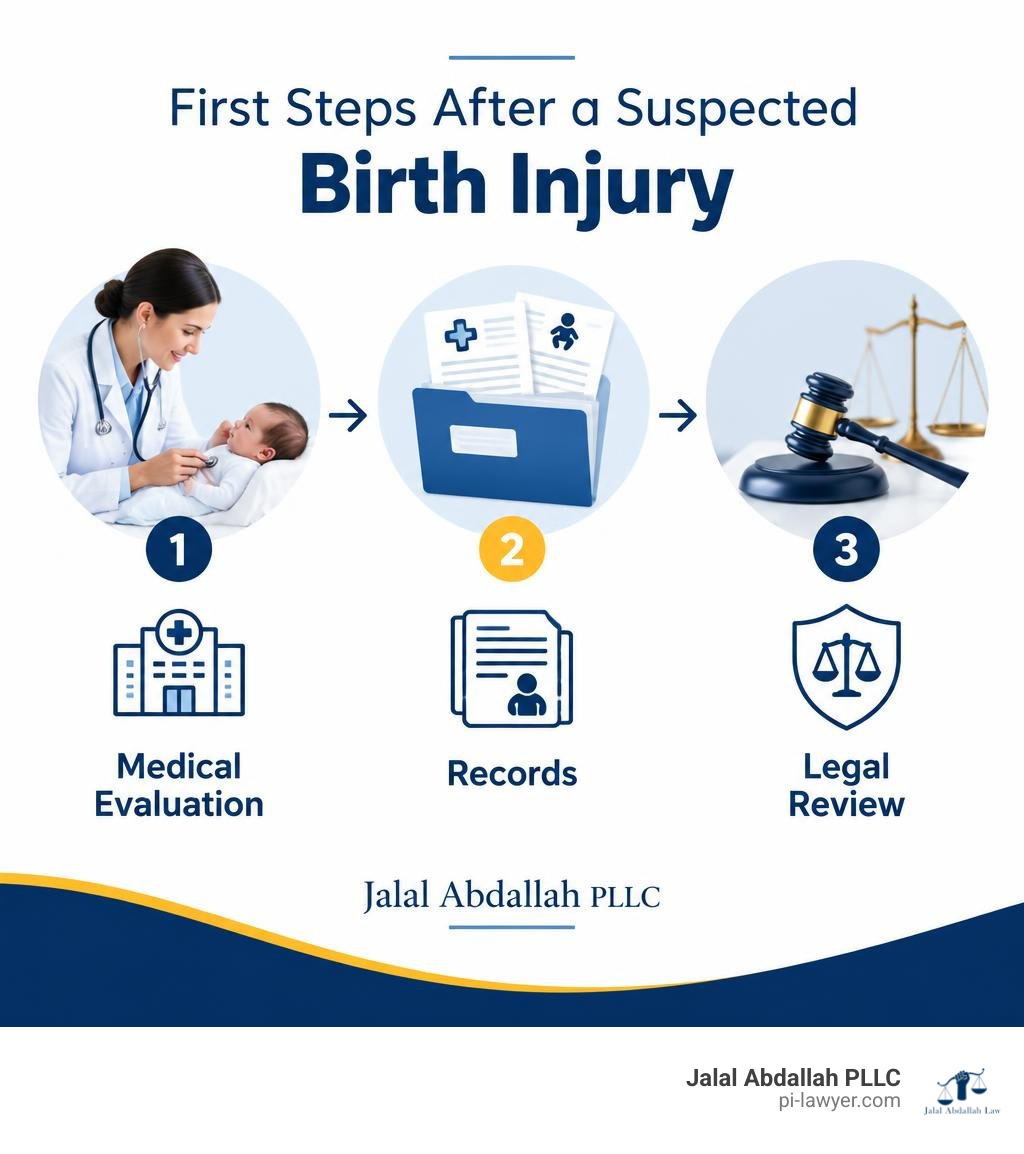
If you think a delivery error harmed your child, get a medical evaluation and request the labor and delivery records for both mother and baby. Then speak with a Dearborn lawyer who handles Michigan medical malpractice claims. Ask how they would review the records, assess whether medical care fell below accepted standards, and protect your filing deadline. A serious injury alone does not prove negligence.
I’m Jalal Abdallah, a Michigan personal injury attorney, and I wrote this guide for families searching “birth injury lawyer Dearborn” after a difficult delivery. My work representing injured people against insurers informs the practical questions below.
Birth injury lawyer Dearborn vocabulary:
- medical malpractice attorney Dearborn
- wrongful death attorney dearborn
- dearborn injury attorney evaluation
Understanding Birth Injuries and Medical Negligence in Dearborn Hospitals
Bringing a child into the world should be one of life’s most joyful milestones. Yet across Wayne County, preventable medical mistakes during labor and delivery alter the course of entire lives in seconds. Across the United States, roughly 6 to 8 out of every 1,000 newborns suffer some form of birth trauma. In Dearborn—where approximately 1,200 babies are born each year—obstetric negligence places vulnerable infants and mothers at serious risk.
Obstetric negligence happens when a doctor, midwife, nurse, or hospital staff member fails to provide the recognized standard of care during pregnancy, labor, delivery, or immediate post-birth resuscitation. The legal standard of care requires medical providers to act with the degree of skill, knowledge, and diligence that reasonable healthcare professionals would demonstrate under identical circumstances.
When labor begins, doctors and nurses must continuously monitor both mother and infant. Electronic fetal heart monitoring tracks how well a baby tolerates contractions. When monitoring indicates fetal distress—such as late decelerations, prolonged bradycardia, or loss of heart rate variability—the delivery team must act immediately. Failing to recognize distress or delaying interventions like an emergency Cesarean section can starve the baby’s brain of oxygen, causing hypoxic-ischemic encephalopathy (HIE) and permanent brain damage.
When delivery teams at local Wayne County healthcare facilities cut corners or miss warning signs, families face devastating emotional and financial challenges. If you suspect clinical mismanagement, navigating your case with a medical malpractice attorney in Dearborn ensures your child’s medical records are thoroughly analyzed to uncover whether care fell below accepted safety standards.
Common Types of Infant Birth Trauma and Long-Term Impacts

Birth injuries range from temporary nerve bruising to severe, permanent neurological damage. Understanding the nature of your baby’s condition is essential for obtaining both medical treatment and legal accountability.
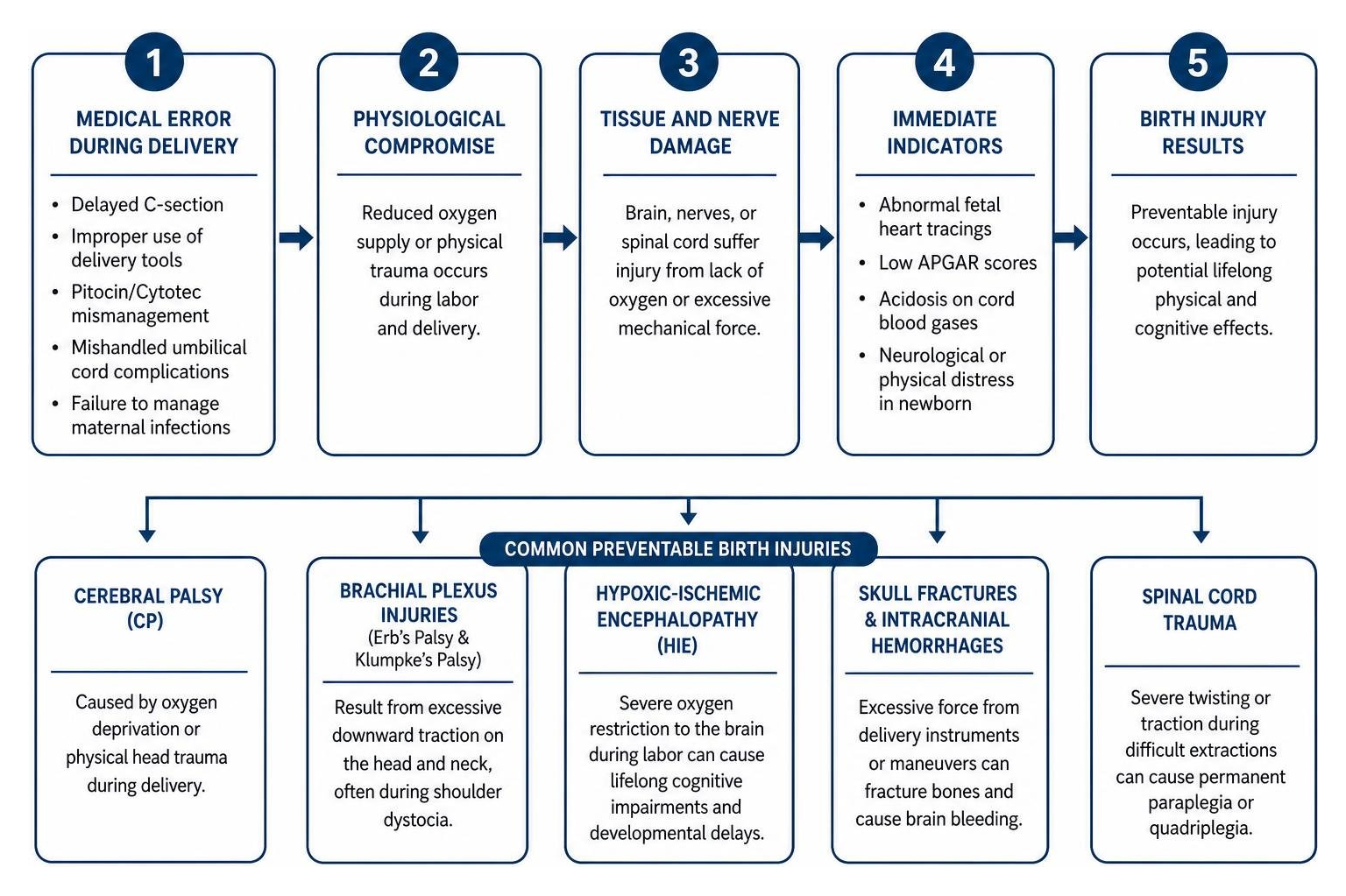
The most common preventable birth injuries diagnosed in Dearborn infants include:
- Cerebral Palsy (CP): Affecting roughly 1 in 323 children nationally, cerebral palsy is a permanent motor disorder often caused by oxygen deprivation or physical head trauma during delivery. It impairs muscle control, posture, balance, and coordination.
- Brachial Plexus Injuries (Erb’s Palsy & Klumpke’s Palsy): These nerve injuries occur when excessive downward traction is applied to the infant’s head and neck during delivery, frequently during shoulder dystocia. Stretched or torn nerves can cause permanent arm weakness or total paralysis.
- Hypoxic-Ischemic Encephalopathy (HIE): Severe oxygen restriction to the brain during active labor can destroy brain tissue within minutes, causing lifelong cognitive impairments, developmental delays, and seizure disorders.
- Infant Skull Fractures and Intracranial Hemorrhages: Excessive mechanical force from delivery instruments or violent maneuvers can fracture delicate cranial bones and trigger bleeding inside the brain (subdural or subarachnoid hematomas).
- Spinal Cord Trauma: Severe twisting or traction during difficult breech extractions can cause permanent paraplegia or quadriplegia.
To determine whether your child’s condition resulted from medical error or natural factors, review the differences outlined below:
| Condition Category | Preventable Birth Injury | Congenital / Genetic Disorder |
|---|---|---|
| Primary Cause | Mechanical trauma, delayed C-section, or oxygen deprivation during labor | Chromosomal anomalies, inherited mutations, or early embryonic disruptions |
| Timing of Origin | Labor, delivery, or immediate neonatal resuscitation | Conception or early weeks of fetal gestation |
| Diagnostic Indicators | Abnormal fetal heart tracings, low APGAR scores, acidosis on cord blood gases | Genetic testing panels, chromosomal karyotypes, structural ultrasounds |
| Preventability | Highly preventable with proper obstetrical monitoring and intervention | Non-preventable through labor management |
| Legal Recourse | Potential grounds for a medical malpractice lawsuit | Typically ineligible for medical malpractice claims |
Medical Errors During Labor and Delivery
A routine delivery can rapidly become an emergency. When medical professionals panic, ignore monitoring alerts, or rely on outdated techniques, severe injuries follow.
Common labor and delivery mistakes include:
- Delayed Emergency Cesarean Sections: When an infant shows clear signs of oxygen distress, every minute counts. Medical standards often require a delivery decision within 30 minutes. Delaying an emergency C-section can cause irreversible brain hypoxia.
- Improper Use of Delivery Tools: Forceps and vacuum extractors require precise technique. Applying excessive traction or misplacing suction cups can crush cranial bones, tear delicate brain blood vessels, or sever cervical nerves.
- Pitocin and Cytotec Mismanagement: Doctors and nurses frequently administer synthetic oxytocin (Pitocin) to induce or speed up contractions. Over-administering these medications can cause uterine tachysystole (excessive, back-to-back contractions). This cuts off maternal blood flow between contractions, suffocating the baby.
- Mishandled Umbilical Cord Complications: An umbilical cord prolapse or true knot compresses the baby’s oxygen lifeline. Unrecognized cord compression demands immediate surgical delivery.
- Failure to Manage Maternal Infections: Untreated maternal conditions like chorioamnionitis or Group B Strep can spread to the infant during delivery, leading to neonatal sepsis, meningitis, and brain damage.
Michigan Legal Requirements and Timelines for Filing a Birth Injury Claim
Pursuing a birth trauma lawsuit in Michigan requires navigating strict procedural rules. Michigan medical malpractice laws are designed to screen out unmerited claims before they reach a courtroom, meaning every step must be completed correctly.
Before initiating a lawsuit against a healthcare provider or hospital in Wayne County, Michigan law (MCL 600.2912b) requires plaintiffs to serve a formal Notice of Intent (NOI) to Sue. This legal document outlines:
- The factual basis of the claim.
- The applicable standard of care recognized by the medical community.
- The specific actions where the medical staff breached that standard.
- The exact injury sustained as a direct result of those errors.
After serving the NOI, families must wait a mandatory statutory period (typically 182 days) before formally filing the complaint in the Wayne County Circuit Court. This waiting period allows parties to explore preliminary settlement options.
Additionally, Michigan law requires filing an Affidavit of Merit alongside the complaint. This affidavit must be signed by a qualified medical professional who practices or teaches in the exact same medical discipline as the defendant physician (such as board-certified obstetrics or maternal-fetal medicine).
Michigan Statute of Limitations and Minor Tolling Rules
Understanding Michigan’s strict filing deadlines is critical for protecting your child’s legal rights. Missing these deadlines permanently bars your family from recovering financial compensation.
Under standard Michigan medical malpractice rules (MCL 600.5838a), lawsuits must generally be filed within two years of the negligent act or within six months of discovering the injury. However, Michigan provides a crucial exception for young children:
- The Eighth Birthday Rule: If a child suffers a birth injury before reaching age 8, parents generally have until the child’s eighth birthday to file a medical malpractice lawsuit.
- The Reproductive Organ Exception: If the medical malpractice involves damage to the child’s reproductive system, the claim may be filed up until the child reaches age 13.
While the eighth-birthday extension provides extra time, delaying legal action creates significant risks. Hospitals routinely purge electronic fetal monitoring records after several years, labor and delivery nurses relocate, and crucial memories fade. Initiating an investigation early preserves vital evidence while it remains fresh.
Calculating Economic and Non-Economic Damages
A birth injury case must secure the lifetime resources your child needs for long-term health and independence. Settlements and verdicts in Michigan consist of economic and non-economic damages. In severe birth injury cases involving permanent disability, compensation frequently reaches millions of dollars.
Economic damages cover tangible financial losses over your child’s entire life:
- Lifetime medical care, surgeries, and pediatric physician visits.
- Physical, occupational, and speech therapy programs.
- In-home nursing care and personal care assistance.
- Specialized medical equipment, motorized wheelchairs, and home vehicle modifications.
- Special education tutoring and developmental therapies.
- Diminished future earning capacity and lost lifetime wages.
Non-economic damages address intangible losses, including physical pain, emotional trauma, disfigurement, and loss of life’s daily pleasures. When evaluating pain and suffering damages, Michigan applies statutory caps to non-economic recoveries. However, cases involving permanent paralysis, cognitive brain damage, or loss of bodily function qualify for Michigan’s higher statutory cap, substantially raising the potential recovery for catastrophic birth trauma. In tragic cases where medical errors prove fatal, families may need to pursue a wrongful death claim to cover funeral expenses and the loss of companionship.
How a Birth Injury Lawyer Dearborn Parents Trust Proves Medical Negligence
Proving that a hospital or obstetrician committed malpractice requires extensive preparation, detailed analysis, and significant legal resources. A seasoned birth injury lawyer builds a clear chain of causation demonstrating that medical mismanagement caused your child’s condition.
At Jalal Abdallah PLLC, we stand up for families facing devastating birth injuries. We level the playing field against large hospital networks and insurance defense teams, handling the heavy legal lifting so parents can focus on caring for their child. Working with a dedicated birth injury lawyer Dearborn parents rely on ensures that every nuance of Michigan malpractice law is meticulously addressed.
To prove medical negligence under Michigan law, four legal elements must be established:
- Duty of Care: A formal doctor-patient relationship existed between the medical team, the mother, and the infant.
- Breach of Duty: The healthcare provider failed to meet the accepted obstetrical standard of care.
- Proximate Causation: The provider’s mistake directly caused the baby’s injury.
- Actual Damages: The child and family suffered measurable physical, emotional, and financial harm.
Initial Case Investigation by a Dearborn Birth Injury Lawyer
Building a successful birth injury claim begins with a comprehensive investigation. When our firm takes on a birth trauma case, we immediately request and examine all relevant records, including:
- Continuous electronic fetal monitoring (EFM) paper and digital tracings.
- Maternal labor flowsheets and medication administration logs (tracking Pitocin dosage changes).
- Internal intrauterine pressure catheter (IUPC) readouts.
- Umbilical cord blood gas analysis results (checking for pH levels and base deficits).
- Neonatal Intensive Care Unit (NICU) admission assessments and neuroimaging scans (such as head ultrasounds, CTs, and MRIs).
- Hospital labor and delivery staffing rosters and shift handover communications.
We collaborate with independent, board-certified obstetricians, pediatric neurologists, maternal-fetal medicine physicians, and labor nurses. These medical authorities review the timeline minute-by-minute, identifying exactly where hospital staff missed signs of distress and showing how standard interventions would have prevented the injury.
Overcoming Hospital Defense Tactics and Insurance Settlement Caps
Hospitals and their malpractice insurers vigorously defend birth injury lawsuits. With multi-million-dollar payouts on the line, defense teams frequently argue that your child’s condition was caused by genetic defects, prenatal maternal infections, or unpredictable complications rather than delivery room errors.
Understanding how insurance adjusters devalue claims is essential. Insurance representatives often approach stressed parents early with lowball settlement offers before the full scope of a child’s developmental delays is known.
We counter these tactics by partnering with certified life care planners and forensic economists. These professionals create detailed financial projections covering your child’s medical, therapeutic, and assistive needs through adulthood, ensuring any proposed settlement covers their entire lifetime care.
Step-by-Step Guide: Navigating Your Child’s Legal and Medical Recovery
Learning that your child may have suffered a preventable birth injury is overwhelming. Taking clear, organized steps protects both your child’s health and your family’s legal rights.
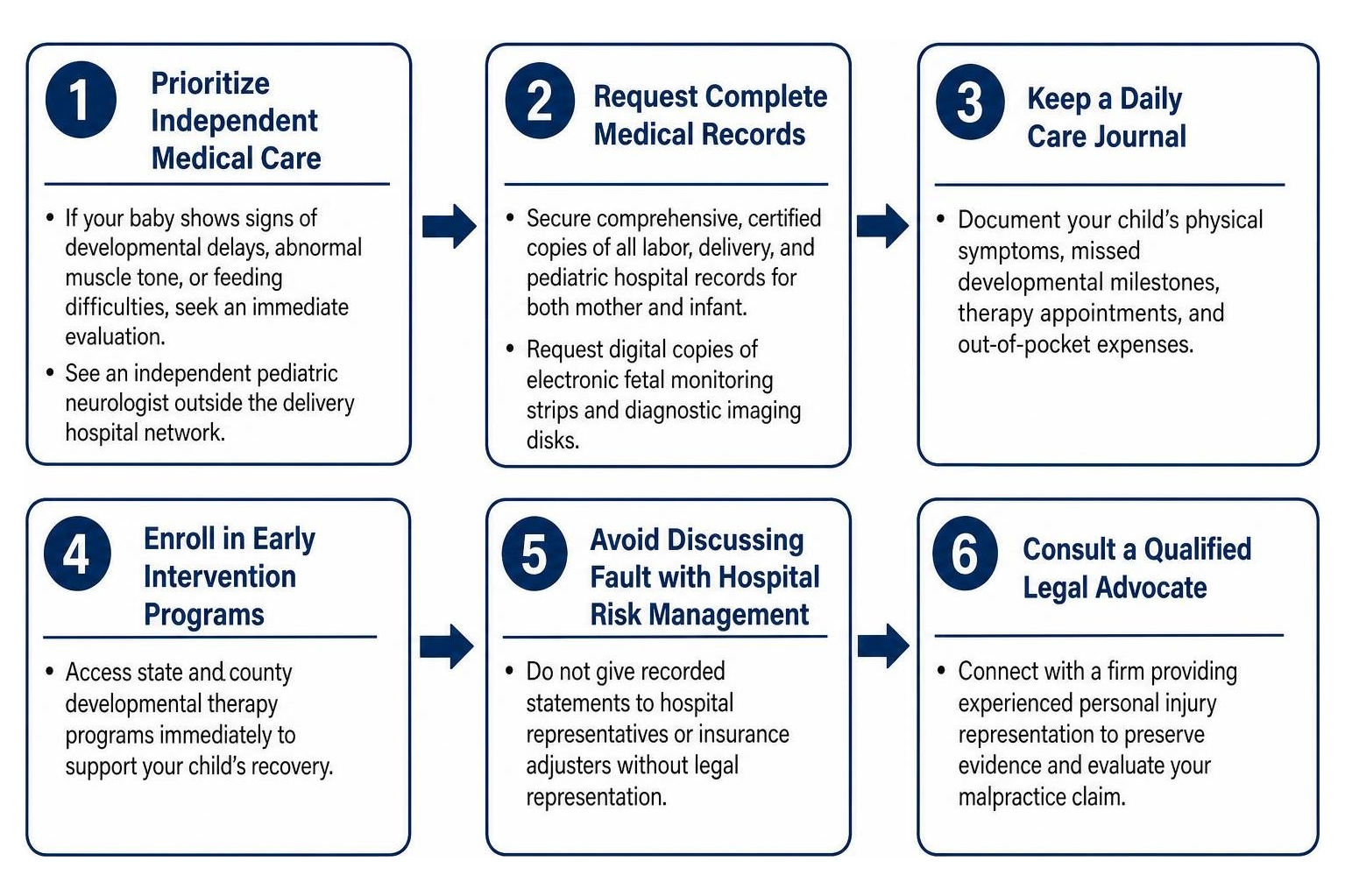
Follow this step-by-step roadmap:
- Prioritize Independent Medical Care: If your baby shows signs of developmental delays, abnormal muscle tone, or feeding difficulties, seek an immediate evaluation from an independent pediatric neurologist outside the delivery hospital network.
- Request Complete Medical Records: Secure comprehensive, certified copies of all labor, delivery, and pediatric hospital records for both mother and infant. Request digital copies of electronic fetal monitoring strips and diagnostic imaging disks.
- Keep a Daily Care Journal: Document your child’s physical symptoms, missed developmental milestones, therapy appointments, and out-of-pocket expenses.
- Enroll in Early Intervention Programs: Access state and county developmental therapy programs immediately to support your child’s recovery.
- Avoid Discussing Fault with Hospital Risk Management: Do not give recorded statements to hospital representatives or insurance adjusters without legal representation.
- Consult a Qualified Legal Advocate: Connect with a firm providing experienced personal injury representation to preserve evidence and evaluate your malpractice claim.
When to Contact a Birth Injury Lawyer Dearborn Trusts for Fast Action
It is best to contact an attorney as soon as you suspect medical errors during delivery. Getting an early Dearborn personal injury case evaluation helps protect crucial hospital monitoring records before standard data-retention windows expire.
Early legal representation allows your legal team to serve the required Michigan Notice of Intent well ahead of statutory deadlines, giving medical authorities ample time to review your records without unnecessary pressure.
Local Medical Resources and Support Services in Wayne County
Caring for a child with a birth injury requires a strong local support network. Families in Dearborn and the broader Wayne County area have access to several specialized healthcare and developmental resources:
- Wayne County Early On Michigan: Offers free early intervention services, physical therapy, and speech therapy for infants and toddlers up to age 3 with developmental delays.
- Children’s Hospital of Michigan (Detroit Medical Center): Provides advanced pediatric neurology, neurosurgery, orthopedics, and neonatal follow-up care within minutes of Dearborn.
- Beaumont Health / Corewell Health Pediatric Services: Offers comprehensive pediatric rehabilitation, physical therapy, and developmental behavioral pediatrics throughout Metro Detroit.
- Wayne RESA (Regional Educational Service Agency): Coordinates special education resources, assistive technology, and individualized education plans (IEPs) across Wayne County school districts.
- Michigan Alliance for Families: A statewide parent support network offering free information, educational webinars, and peer support for families navigating childhood disabilities.
Frequently Asked Questions About Dearborn Birth Injury Claims
What is the average settlement for a birth injury lawsuit in Michigan?
Because birth injuries often cause lifelong disabilities requiring round-the-clock care, settlement amounts are among the highest in personal injury law. In the United States, birth injury settlements and verdicts frequently exceed $1 million, with severe brain damage or cerebral palsy recoveries reaching $5 million to $10 million or more. Payouts depend on the lifetime cost of care, lost future earnings, the severity of the disability, and available hospital insurance limits.
How long do parents have to file a birth injury claim for a child in Dearborn?
Under Michigan’s minor tolling statute (MCL 600.5838a), parents generally have until their child’s eighth birthday to file a medical malpractice lawsuit for injuries sustained during delivery. If the injury involves reproductive system damage, the deadline extends to age 13. However, you should not wait—securing medical records and conducting thorough reviews takes several months before the formal Notice of Intent can be served.
What is the difference between a birth injury and a birth defect?
A birth defect (congenital anomaly) originates during early fetal development or conception due to genetic mutations, chromosomal variations, or environmental factors (such as Down syndrome or congenital heart defects). In contrast, a birth injury is physical harm or oxygen deprivation that occurs during labor, delivery, or immediate post-birth care, frequently caused by medical mismanagement, delayed C-sections, or the misuse of delivery tools.
Protecting Your Child’s Future and Financial Well-Being
A preventable birth injury alters your family’s plans, bringing unexpected medical hurdles and long-term financial questions. When medical staff fail to follow accepted safety standards during labor and delivery, they must be held accountable for the harm they cause.
At Jalal Abdallah PLLC, we fight tenaciously for families facing life-changing injuries. We take on large hospital systems and powerful insurance carriers to secure the comprehensive resources, therapies, and financial stability your child will need for years to come.
If you believe delivery errors harmed your baby, you do not have to carry this burden alone. Take the first step today to protect your family’s future: schedule a confidential case consultation with our dedicated legal team.
Share This Article

Schedule Your Free Consultation Today!
Reach out today and receive a consultation, completely free of charge - we'll evaluate your case and let you know what comes next.


