 Skip to content
Understanding Elder Abuse Laws and How a Michigan Elder Abuse Lawyer Protects Seniors
Under Michigan law, elder abuse occurs when someone harms, neglects, or takes advantage of a vulnerable adult who cannot protect themselves due to age, physical impairment, or mental limitations. State statutes protect vulnerable seniors across private homes, assisted living environments, and licensed nursing care centers.
When families suspect mistreatment, consulting a michigan elder abuse lawyer provides clarity on how to hold negligent parties responsible. Legal protection covers several primary categories of abuse:
- Physical Abuse: The intentional use of physical force causing pain, injury, or impairment.
- Emotional and Psychological Abuse: Verbal assaults, intimidation, humiliation, isolation, or threats that cause severe mental strain.
- Neglect: The failure of a caregiver or residential facility to supply necessary care, including food, shelter, clothing, medical attention, and basic hygiene.
- Financial Exploitation: Illegal or unauthorized control over an elder’s money, property, or legal assets.
Victims and their families can turn to community resources such as the Elder Law & Advocacy Center – Neighborhood Legal Services for public advocacy and guidance. Through civil claims, we seek financial recovery for medical care, pain and suffering, and stolen property.
Physical Abuse and Neglect in Nursing Homes
Physical neglect in long-term care settings often traces back to underlying corporate decisions. Staffing shortages lead directly to compromised resident care. Research consistently shows a direct link between low nurse-to-patient staffing ratios and increased rates of resident abuse and neglect.
When facilities prioritize profits over safety, vulnerable residents suffer severe consequences:
- Bedsores (Pressure Ulcers): Unmovable residents left in bed without regular turning develop painful tissue damage that can lead to life-threatening sepsis.
- Malnutrition and Dehydration: Inadequate assistance during meal times causes rapid weight loss and severe fluid loss.
- Fall Injuries: Unassisted transfers lead to broken bones and head trauma.
- Medication Errors: Over-sedation or missed dosages create severe medical emergencies.
Where medical negligence occurs within a care center, families may need specialized Medical Malpractice Legal Guidance to examine physician chart orders, nursing administration logs, and staffing records.
Financial Exploitation and How a Michigan Elder Abuse Lawyer Recovers Assets
Financial exploitation strips seniors of their life savings and financial security. Unscrupulous family members, opportunistic caregivers, or dishonest legal representatives often target confused or isolated older adults.
Common forms of financial abuse include:
- Misusing a Durable Power of Attorney to divert funds.
- Forging signatures on checks, property deeds, or financial documents.
- Coercing an elder to alter wills, trusts, or beneficiary designations.
- Making unauthorized bank withdrawals or credit card transactions.
Through civil litigation, a michigan elder abuse lawyer files lawsuits to freeze suspicious accounts, void fraudulent transfers, revoke compromised powers of attorney, and recover stolen assets.
Recognizing Signs of Senior Harm and Knowing When to Seek Legal Representation
Detecting abuse requires constant attention, as victims are often unable or too frightened to report mistreatment themselves.

Key red flags that demand immediate investigation include:
- Physical Red Flags: Unexplained bruises, welts, burns, lacerations, recurring bedsores, or frequent unexplained visits to the emergency room.
- Behavioral Changes: Sudden withdrawal, extreme anxiety near specific care staff, depression, or severe emotional shifts.
- Hygiene and Health Decline: Poor personal cleanliness, dirty clothing, unwashed hair, sudden weight loss, or persistent dehydration.
- Financial Anomalies: Missing personal items, unexplained bank withdrawals, sudden changes to legal trusts, or unpaid utility bills despite adequate income.
If you observe these warning signs, document your concerns immediately and seek legal representation to evaluate the situation.
Identifying Mandated Reporters and Legal Duty Under Michigan Statutes
Michigan law imposes mandatory reporting obligations on specific professionals who interact with vulnerable adults. Mandated reporters must inform state authorities immediately if they suspect an adult has been abused, neglected, or exploited.
Under Michigan statutes, mandated reporters include:
- Healthcare personnel (physicians, nurses, hospital staff)
- Social welfare and mental health professionals
- Employees of licensed adult foster care and nursing facilities
- Law enforcement officers
- County medical examiner staff
When a mandated reporter fails to report suspected mistreatment, their silence can form part of a civil suit establishing facility liability and negligence.
The Process of Reporting Abuse to Michigan State Agencies and Law Enforcement
Reporting elder mistreatment requires notifying specific state authorities based on where the abuse occurs and the nature of the harm.
- Adult Protective Services (APS): Call 1-855-444-3911 to report suspected abuse, neglect, or exploitation of vulnerable adults living at home or in community settings.
- Michigan Attorney General’s Health Care Fraud Division: Call 800-24-ABUSE (800-242-2873) to report physical mistreatment, severe neglect, or financial fraud occurring within licensed nursing facilities.
- LARA Bureau of Community and Health Systems: Call 800-882-6006 to report regulatory violations in nursing facilities and adult foster homes.
- Disability Rights Michigan: Call 800-288-5923 for advocacy regarding institutionalized individuals with physical or developmental disabilities.
To assist state investigators, document details using the state’s Vulnerable Adult Incident Report framework, recording dates, staff names, witness accounts, and physical evidence.
Differences Between Civil Injury Claims and Criminal Prosecution
Families often confuse state criminal investigations with civil lawsuits. Both avenues can proceed at the same time, but they serve distinct legal purposes:
| Feature | Criminal Prosecution | Civil Injury Lawsuit |
|---|---|---|
| Brought By | Local Prosecutors / State Attorney General | Victim or Victim’s Estate (via legal counsel) |
| Purpose | Punish offender (Jail, Probation, Fines) | Recover financial compensation for victim |
| Burden of Proof | Beyond a Reasonable Doubt | Preponderance of the Evidence (More likely than not) |
| Outcome | Criminal Conviction | Financial Recovery / Restitution |
A criminal charge is not required to win a civil injury lawsuit. Even if police decline to press charges, you can still bring civil actions under theories of facility negligence or Dearborn Premises Liability Claims to demand accountability for unsafe living conditions.
Building a Strong Legal Case: Gathering Evidence and Overcoming Litigation Challenges
Nursing homes and long-term care corporations move quickly to protect themselves when allegations arise. Building a strong case requires securing reliable evidence before records are altered or lost.
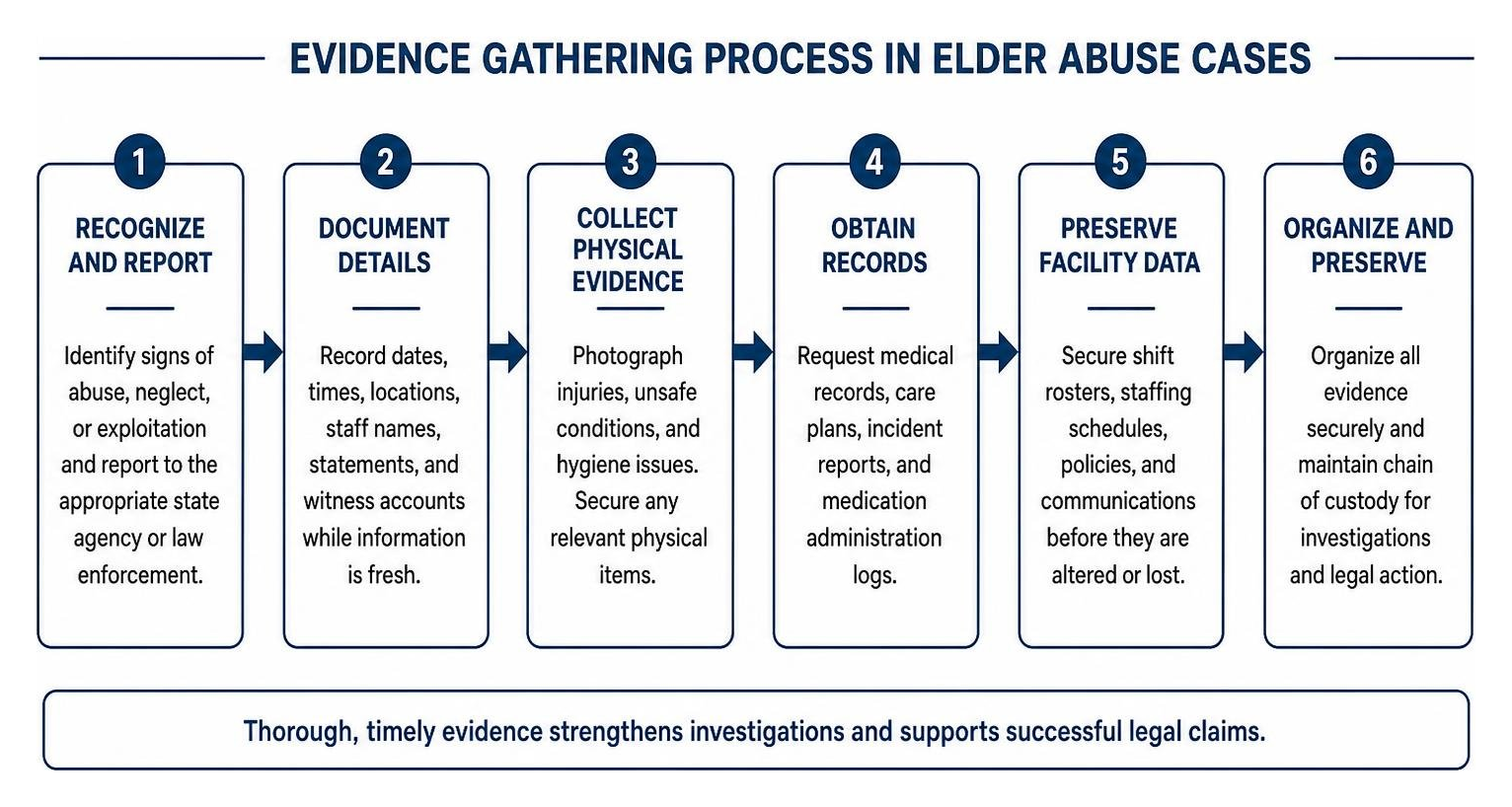
Key evidence needed to establish facility fault includes:
- Medical Records and Physician Charts: Internal logs reveal whether prescribed medications, wound dressings, and mobility assistance schedules were followed.
- Facility Shift Rosters: Staffing documents prove whether the facility operated below legally required nurse-to-patient ratios.
- Photos and Videos: High-resolution photographs showing physical injuries, bedsores, room conditions, and poor hygiene provide direct evidence.
- Eyewitness Testimony: Accounts from family members, visiting friends, and former facility employees help build a clear timeline.
When neglect or physical mistreatment results in tragic fatal outcomes, families can pursue justice through a specialized Fatal Accident Lawsuits Guide to recover funeral costs, medical bills, and compensation for lost companionship.
Key Factors When Choosing Legal Counsel in Dearborn
Handling nursing home abuse litigation requires a firm that knows how to deal with corporate defense lawyers and insurance carriers.

When selecting legal representation in Wayne County, look for these credentials:
- Local Court Experience: Familiarity with Wayne County Circuit Court and local probate procedures speeds up legal resolution.
- Contingency Fee Structure: You should pay zero upfront fees. Legal fees are only collected if your lawyer recovers compensation for your family.
- Resource Depth: The ability to hire qualified medical experts, forensic accountants, and care plan specialists.
- Direct Communication: You should work directly with your attorney, not just paralegals or intake assistants.
At Jalal Abdallah PLLC, we provide relentless legal advocacy for underdogs facing large healthcare networks and corporate insurance providers across Southfield, Dearborn, Detroit, and Warren.
Essential Questions to Ask a Michigan Elder Abuse Lawyer During Consultation
Before signing an agreement, ask these specific questions during your intake consultation:
- How many nursing home neglect and financial exploitation cases have you handled in Wayne County courts?
- What is the specific statute of limitations for my family member’s claim?
- Will you handle the case directly, or will it be handed off to another firm?
- How do you approach gathering internal facility records and nurse staffing logs?
- What out-of-pocket costs am I responsible for if the case is unsuccessful?
Frequently Asked Questions About Senior Protection in Dearborn
What is the deadline to file a nursing home abuse lawsuit in Michigan?
In Michigan, the general statute of limitations for personal injury claims is 3 years from the date the injury occurred. However, if the abuse involves medical malpractice, the deadline is generally 2 years from the act of negligence or 6 months from when the injury was discovered. Claims involving fatal injuries may fall under Michigan’s wrongful death statute, which alters filing timelines. Contact a lawyer immediately to protect your right to file.
What should I do immediately if I suspect my parent is in danger?
If your parent faces immediate physical harm or emergency medical needs, call 911 right away. Once their immediate safety is secured, report the situation to Michigan Adult Protective Services at 1-855-444-3911. Take clear photos of any injuries, document poor facility conditions, note dates and employee names, and preserve all relevant financial statements. Contact a lawyer before discussing the situation with facility representatives or their insurance adjusters.
How much does it cost to retain legal representation for an elder abuse case?
Representation is provided on a contingency fee basis. This means there are no upfront retainers or out-of-pocket legal expenses. Legal fees and litigation costs are deducted only from the final settlement or jury award if your case is successful. If no financial recovery is obtained, you owe no attorney fees.
Demanding Justice for Neglected Seniors in Dearborn
Your loved one deserves to live with dignity, care, and safety. When long-term care centers, caregivers, or predatory individuals betray that trust, our team stands ready to step in and hold them accountable.
We aggressively confront corporate nursing networks, expose dangerous staffing decisions, and fight to recover stolen assets and compensation for injured seniors across Dearborn, Detroit, Southfield, and Warren.
To discuss your case with our team, contact our Personal Injury Legal Team today. You can also visit our local office profile via Jalal Abdallah PLLC to review our location details and schedule a free, confidential case evaluation. Learn more about how we fight for injured clients by visiting our Personal Injury Practice, exploring our Firm Homepage, or reviewing our full range of Legal Services.
Share This Article

Schedule Your Free Consultation Today!
Reach out today and receive a consultation, completely free of charge - we'll evaluate your case and let you know what comes next.


