 Skip to content
Start Your Dearborn Truck Insurance Claim With the Right Proof
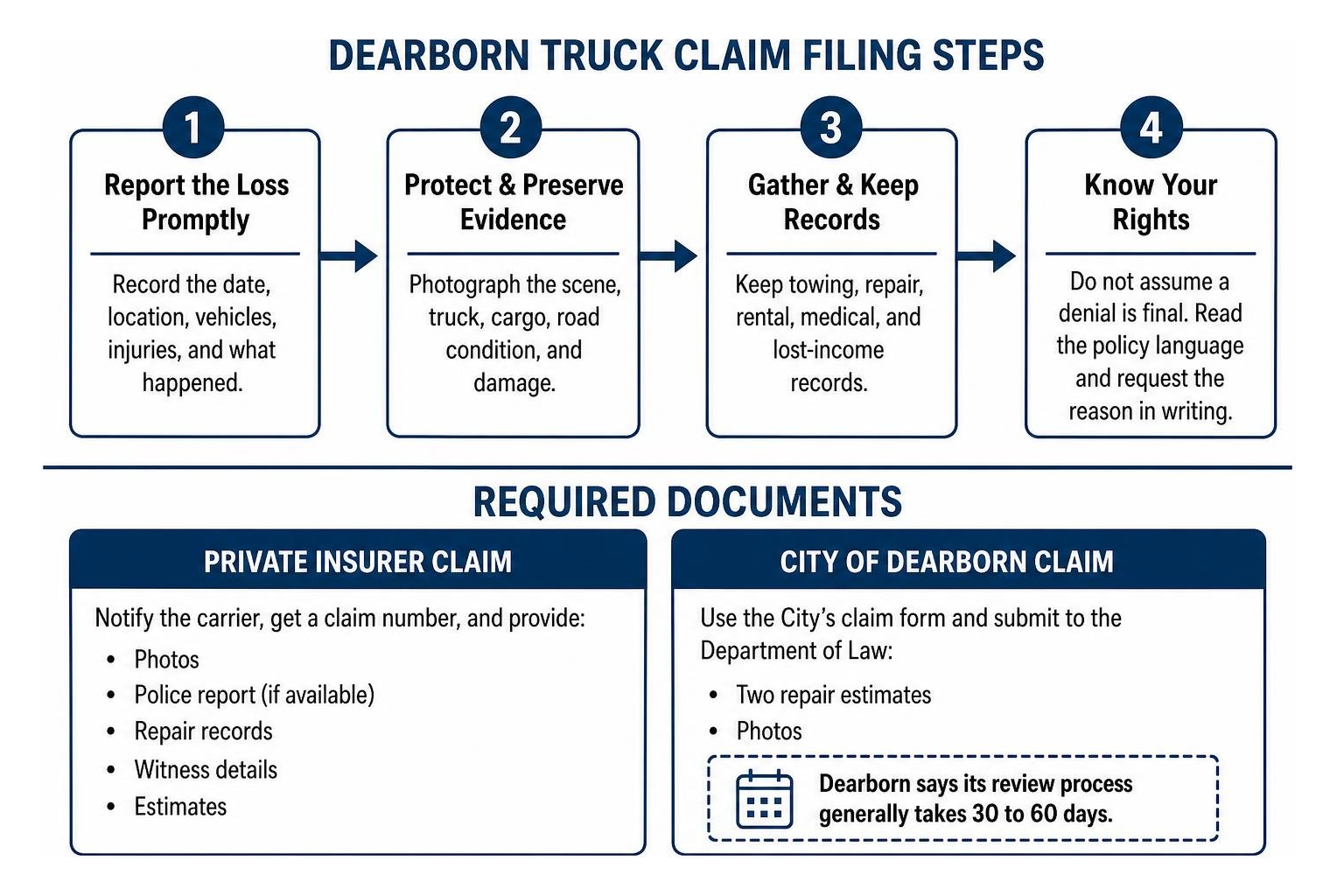
After a truck crash or damage event, report the loss promptly, protect the truck and cargo from further damage, and save every piece of evidence. For a private-insurer claim, notify the carrier, get a claim number, and provide photos, a police report if available, repair records, witness details, and estimates. If the City of Dearborn may be responsible, use the City’s claim form and submit it to the Department of Law with two repair estimates and photos for property damage.
A strong Dearborn truck insurance claim starts with a simple file:
- Record the date, location, vehicles, injuries, and what happened.
- Photograph the scene, truck, cargo, road condition, and damage.
- Keep towing, repair, rental, medical, and lost-income records.
- Do not assume a denial is final. Read the policy language and request the reason in writing.
Commercial claims can involve more than a collision. Cargo damage, theft, vandalism, weather losses, trailer interchange issues, and injury claims may each follow different coverage rules. City claims also differ from private insurance claims: Dearborn says its review process generally takes 30 to 60 days.
I am Jalal Abdallah, a Michigan trial attorney and licensed insurance producer with Property and Casualty experience who helps people understand the insurance process and stand up for fair treatment. This guide explains how to build and manage a Dearborn truck insurance claim without getting lost in the paperwork.
Dearborn truck insurance claim terms to learn:
Common Commercial Truck Losses and Coverage Types in Michigan

Commercial trucking operations face distinct operational hazards throughout Wayne County. Navigating an insurance loss requires matching the specific type of property or casualty event to the proper policy line.
Physical Damage and Motor Carrier Protection
Physical damage policies cover direct financial losses to the commercial vehicle itself. This coverage generally breaks down into distinct categories:
- Collision Coverage: Covers physical repairs or actual cash value replacement when a rig collides with another vehicle, an object, or overturns.
- Comprehensive Coverage: Covers non-collision events, including theft, vandalism, fire, windstorms, or falling debris.
- Downtime and Rental Reimbursement: Compensates for lost operational revenue or funds a temporary replacement truck while your commercial vehicle sits in a repair bay.
- Trailer Interchange and Bobtail Insurance: Protects non-owned trailers under an interchange agreement, while bobtail coverage shields the tractor when operated without an attached trailer outside of dispatch.
- Cargo and On-Hook Insurance: Safeguards the transported freight against transit damage, loss, or spill cleanup, with on-hook coverage extending specifically to towing operations.
Many commercial carriers explore tailored Trucking Insurance Options that incorporate diminishing deductible endorsements, which can reduce your out-of-pocket deductible by 25% for each loss-free policy year.
Third-Party Liability and Bodily Injury Coverage
When collisions result in harm to other motorists, pedestrians, or commercial property, third-party liability lines respond. Under Michigan’s unique statutory framework, commercial motor carriers must maintain substantial liability limits to address third-party property damage and bodily injury claims that cross the serious impairment threshold. If your collision involves severe harm to drivers or bystanders, Navigating Your Michigan Trucking Injury Claim: What You Need to Know helps clarify the complex interaction between mandatory Personal Injury Protection (PIP) coverages and third-party tort recovery.
Step-by-Step Guide to Filing a Private Dearborn Truck Insurance Claim
Submitting a claim through a private commercial carrier demands strict procedural compliance to avoid coverage disputes or unreasonable processing delays.
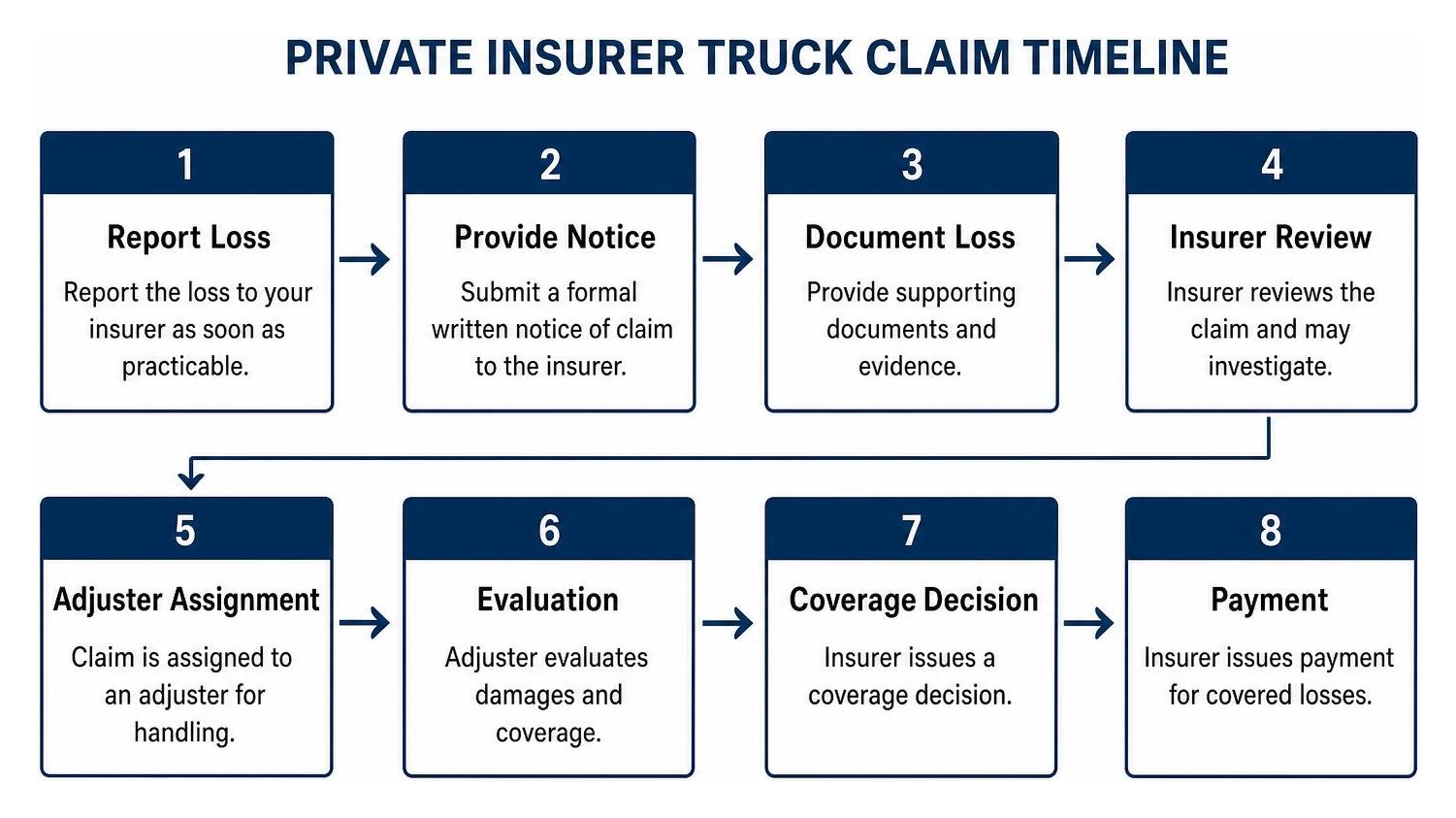
Most national and regional underwriters, including carriers such as Selective Insurance (which maintains 24/7 non-flood reporting lines at 866-455-9969) and Great American Insurance Group (which has held an A or better AM Best rating for over 115 years), follow structured proof-of-loss sequences:
| Claim Element | Private Commercial Insurer Claim | City of Dearborn Municipal Claim |
|---|---|---|
| Primary Intake Entity | Carrier Claims Department / TPA | Dearborn Department of Law |
| Reporting Timeframe | Prompt notice (as defined in policy) | Strict municipal notice statutes |
| Required Estimates | Typically 1 itemized appraisal / direct shop | Exactly 2 written repair estimates |
| Average Resolution Window | 15 to 45 business days | 30 to 60 calendar days |
| Injury Documentation | Medical bills, PIP claim forms, records | Standard records + 2-page CMS Medicare form |
Essential Documentation for Your Dearborn Truck Insurance Claim
To protect your rights and ensure full reimbursement, build a comprehensive evidentiary file immediately following an incident. Knowing What to Do Immediately After a Car Accident in Michigan forms the bedrock of an unassailable claim. Make sure to collect:
- Official Police Crash Report: Secure the UD-10 report from the Dearborn Police Department or Michigan State Police.
- Electronic Control Module (ECM) Data: Preserve digital engine records, telematics, and electronic logging device (ELD) hours-of-service files.
- Photographic and Video Evidence: Capture high-resolution images of vehicle positioning, impact zones, skid marks, load securement, and roadway obstacles.
- Maintenance and Inspection Logs: Compile pre-trip inspection logs, annual DOT certifications, and recent service invoices.
- Witness and Driver Statements: Collect contact details and written impressions from unaligned witnesses and your operator.
Working with Independent and Carrier Claims Adjusters
Once you report the incident, the carrier assigns a staff claims examiner or an independent adjusting firm. In Michigan, organizations like Churchill Claims Services have conducted third-party field evaluations and damage appraisals since 2001. Adjusters inspect physical damage, determine labor hours, and look for pre-existing wear.
Review every estimate closely. If the insurer’s appraiser uses salvage or aftermarket components that fail to match OEM specifications, request a supplemental estimate before signing any final property damage release.
How to File a Property Damage or Injury Claim with the City of Dearborn
When municipal infrastructure, city maintenance operations, or municipal fleet vehicles cause damage to your commercial vehicle or property, your recovery path runs directly through local government administration rather than a private insurer’s call center.
Specific Municipal Filing Rules for a Dearborn Truck Insurance Claim
Filing against a public entity requires strict adherence to municipal protocols. To submit a claim, you must complete the official City of Dearborn Claim Form and follow these precise filing criteria:
- Property Damage Requirements: You must provide exactly two independent repair estimates, clear photographs of the damage, and any itemized invoices showing paid out-of-pocket expenses.
- Personal Injury Requirements: You must submit site photos, injury photos, medical bills, and complete the mandatory two-page Medicare/Medicaid reporting document.
- CMS Compliance: Under Section 111 of the Medicare, Medicaid, and SCHIP Extension Act (MMSEA), the City must collect Medicare Beneficiary identifiers and Social Security numbers to clear potential conditional payment liens before issuing any injury settlement funds.
The Role of the Dearborn Department of Law in Claims Review
All municipal claims are investigated and processed by the City of Dearborn Department of Law. The typical internal review takes 30 to 60 days to complete. During this window, the City assesses municipal liability, reviews police reports, and checks for statutory governmental immunity exceptions (such as road defect exceptions or municipal vehicle negligence).
If your municipal claim remains unresolved after 60 days, follow up directly with the Legal Department by calling 313-943-2035 or emailing rf****@******rn.gov. Keep your assigned claim number in the subject line of every communication.
Navigating Complex Exclusions and Denied Trucking Claims
Insurance companies write commercial policies to manage their own risk, frequently inserting sweeping exclusions that surprise truck owners during a claim.
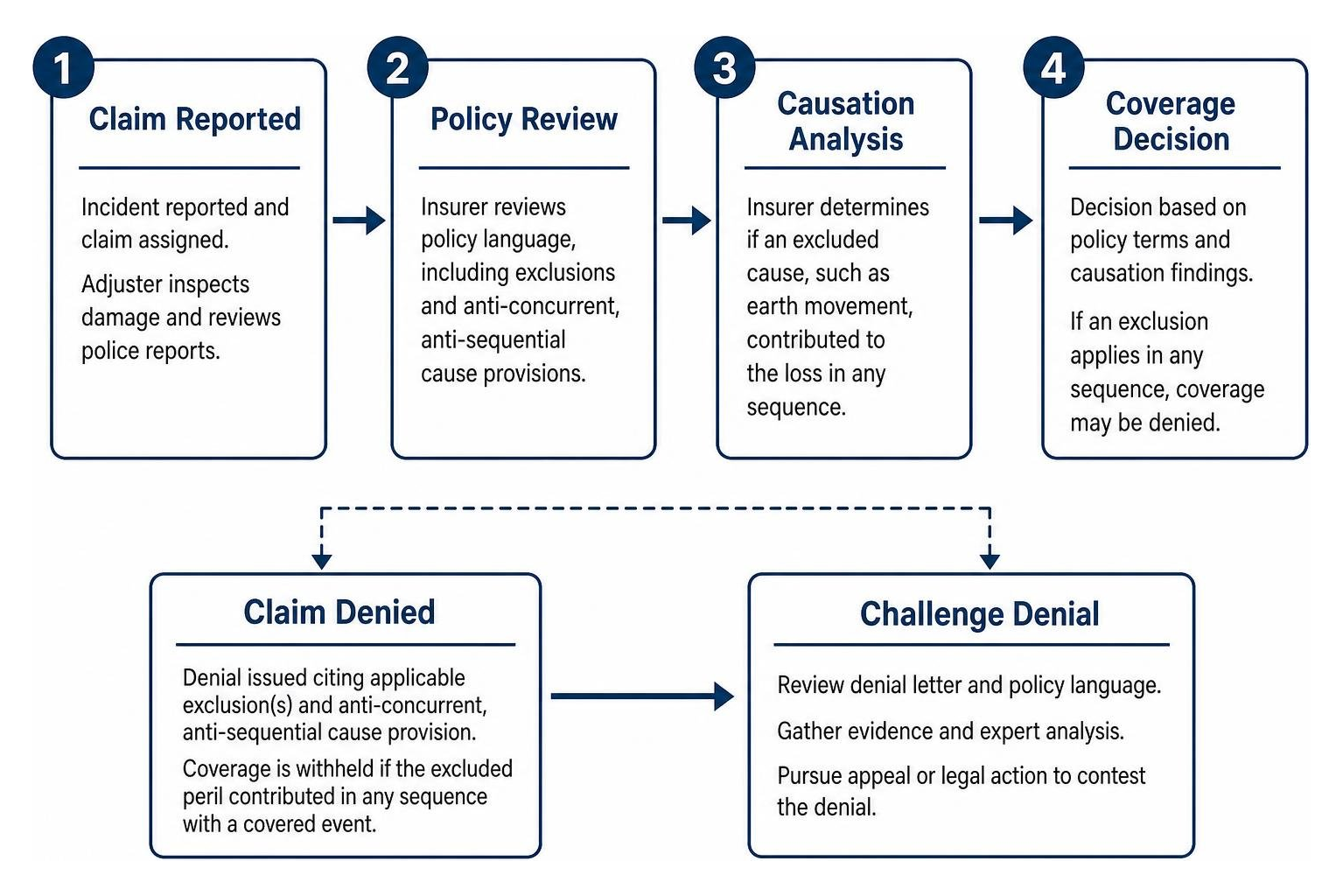
A critical example of exclusionary enforcement occurred in the federal decision Arlene’s Truck Salvage v. Northfield/Northland Insurance Company (E.D. Mich. 2024). In that case, a commercial facility sustained structural damage involving pile-driving activity, utility poles, and soil shifts. The court granted summary judgment in favor of the insurer, upholding a strict Earth Movement Exclusion.
The court ruled that the exclusion applied to soil displacement regardless of whether the initial cause was natural or man-made. Furthermore, the court enforced the policy’s anti-concurrent, anti-sequential cause provision. This clause eliminates coverage if an excluded peril (such as soil movement) contributes to a loss in any sequence alongside an otherwise covered event.
When insurers use complex exclusionary clauses to deny coverage for rig or structural damage, having dedicated representation from Jalal Abdallah PLLC ensures your policy language is properly analyzed.
Frequently Asked Questions About Dearborn Trucking Claims
How long does the City of Dearborn take to resolve an insurance claim?
The City of Dearborn’s Department of Law generally takes between 30 and 60 days to investigate, verify, and resolve filed claims. If you do not receive a written determination within 60 days, contact the legal division at 313-943-2035 or rf****@******rn.gov to check the status of your claim.
What should I do if my commercial truck insurer denies my claim under an exclusionary clause?
Do not accept a verbal or brief denial letter as the final word. Demand a complete written explanation citing the exact policy sections, exclusions, and endorsements used to deny coverage. Have an attorney examine the policy’s insuring agreement, concurrent causation clauses, and reservation-of-rights notices. For insights into financial recovery valuations across Wayne County, review our Dearborn Car Wreck Compensation Guide: What Your Crash Is Really Worth.
What special documentation is needed if an injured driver receives Medicare or Medicaid?
When submitting a personal injury claim to a municipal body like the City of Dearborn, claimants must complete a dedicated two-page CMS disclosure form. This documentation allows the municipality to comply with federal Section 111 reporting standards and ensures that any outstanding Medicare conditional payment liens are resolved before settlement funds are released.
Standing Strong Against Insurers and Municipal Red Tape
Navigating a commercial truck loss requires attention to detail, strict adherence to deadlines, and an understanding of insurance contracts. Whether you are dealing with a private carrier interpreting an exclusionary clause or filing documentation with the Dearborn Department of Law, our team at Jalal Abdallah PLLC is committed to providing persistent, determined advocacy for everyday operators facing powerful institutions. If you need assistance recovering what your business is owed, contact us through our Dearborn Truck Accident Legal Representation portal to ensure your commercial rights remain fully protected.
Share This Article

Schedule Your Free Consultation Today!
Reach out today and receive a consultation, completely free of charge - we'll evaluate your case and let you know what comes next.


