 Skip to content
How an Assisted Living Attorney in Dearborn Can Protect Your Family
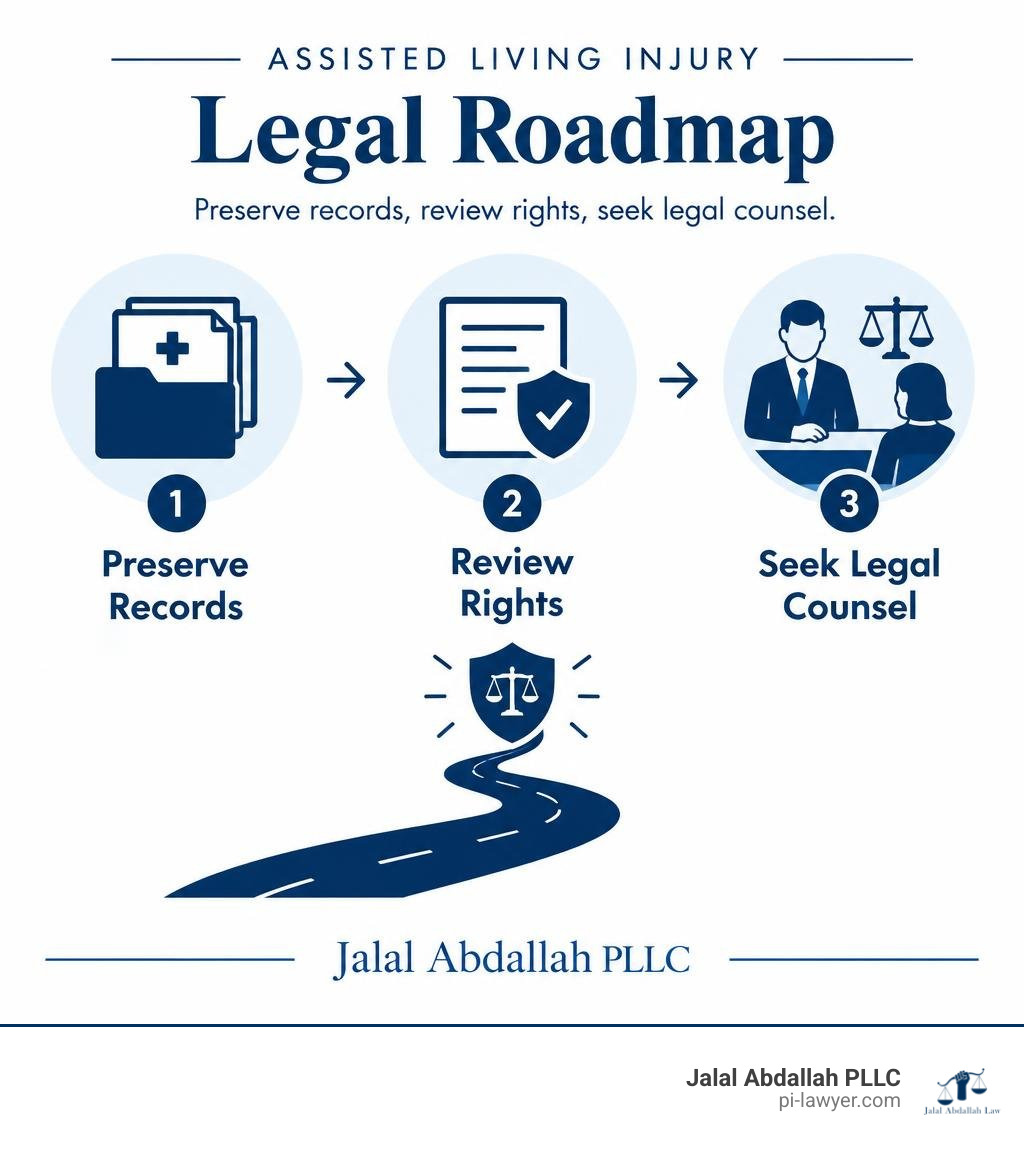
If a loved one was hurt, neglected, or treated unfairly in an assisted living setting, an assisted living attorney in Dearborn can help you understand your rights, preserve key evidence, and pursue accountability. Bring the admission agreement, incident reports, medical records, photos, bills, and facility messages to your first meeting.
Legal counsel can also review contracts for unfair financial terms, address disputes over care or billing, and help families respond when a facility denies responsibility for an injury. Acting quickly matters because records, witness memories, and video footage may not be available for long.
I am Jalal Abdallah, a Michigan personal injury trial attorney who represents people facing difficult injury and insurance disputes. As an assisted living attorney Dearborn families can consult after a safety failure, I bring a results-focused approach to protecting people who feel outmatched by large institutions.
Assisted living attorney dearborn vocab to learn:
Why Hire an Assisted Living Attorney Dearborn Families Trust for Long-Term Care

Transitioning a family member into a residential community involves navigating a maze of medical assessments, dense contracts, and significant financial commitments. While we hope every community provides compassionate, top-tier service, the reality is that profit-driven management, staff shortages, and administrative red tape can put vulnerable residents at serious risk.
When you partner with our legal team at Jalal Abdallah PLLC, you gain an advocate dedicated to ensuring your loved one is treated with dignity, safety, and respect under Michigan law.
Resident Safety, Injury Claims, and Advocacy
Every senior deserves a safe, supportive living environment. Unfortunately, safety lapses happen when facilities cut corners. When an incident occurs, administrators often close ranks, making it difficult for families to uncover the truth.
Preserving evidence quickly is critical. This includes securing shift logs, electronic card-swipe records, internal incident evaluations, and security camera footage before it is routinely overwritten. If your family is dealing with severe mistreatment or harm, finding a trusted nursing home abuse attorney in Dearborn MI ensures that you have a fearless advocate in your corner to handle formal dispute resolution and hold negligent facilities accountable.
Assisted Living vs. Nursing Home Care: Legal and Financial Differences
Families often confuse assisted living communities with skilled nursing facilities (nursing homes), but they operate under entirely different legal frameworks, licensing rules, and payment structures in Michigan.
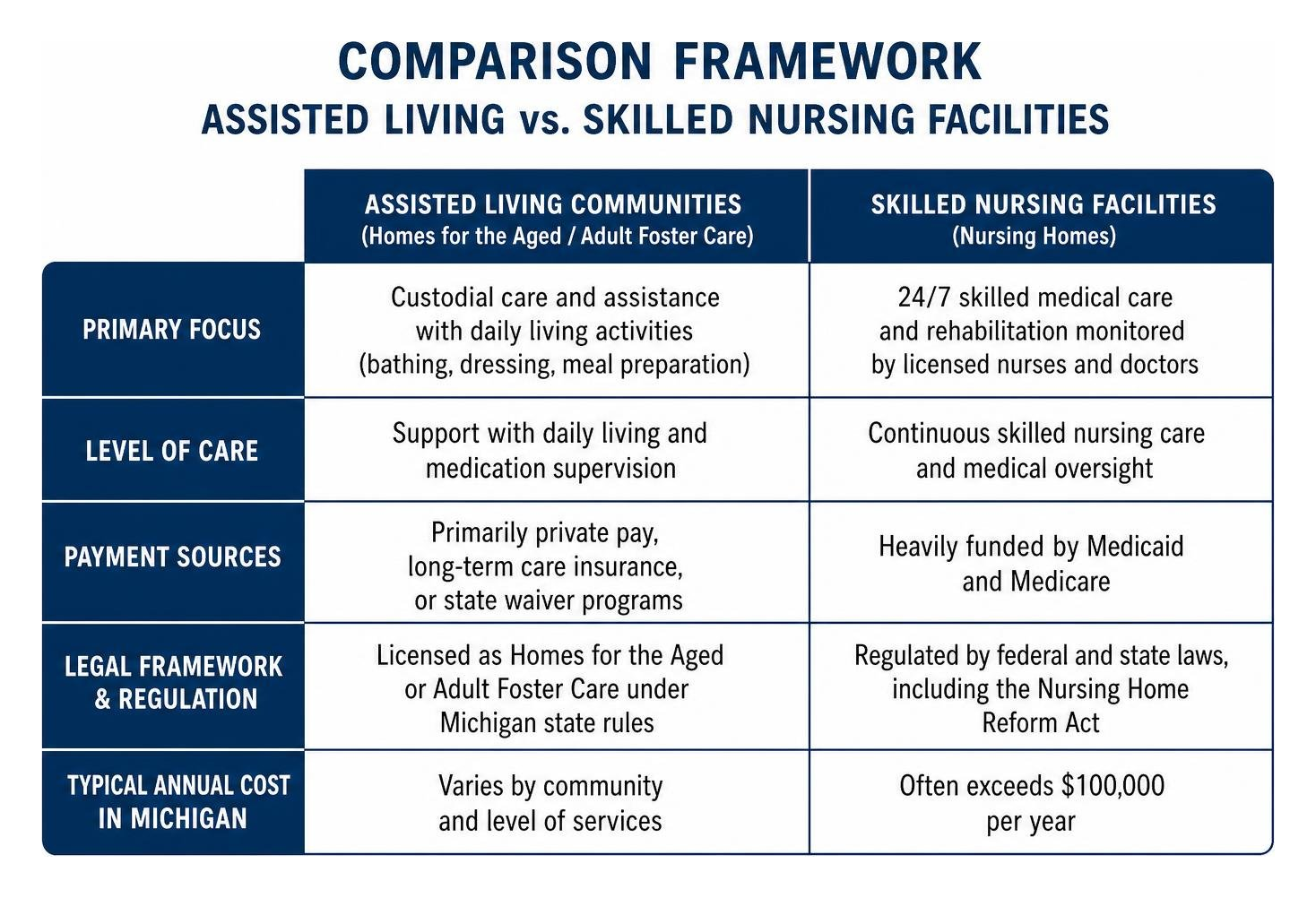
- Assisted Living Communities (Homes for the Aged / Adult Foster Care): These settings emphasize custodial care, assistance with daily living activities (bathing, dressing, meal preparation), and medication supervision. They are primarily paid for privately, through long-term care insurance policies, or via specific state waiver programs.
- Skilled Nursing Facilities (Nursing Homes): These provide 24/7 skilled medical care and rehabilitation monitored by licensed nurses and doctors. Because the cost of nursing home care in Michigan often exceeds $100,000 per year, they are heavily funded through Medicaid and Medicare and are bound by strict federal safety mandates under the Nursing Home Reform Act.
Understanding this distinction ensures that families demand the exact standard of care required by Michigan regulatory agencies, including the Michigan Department of Health and Human Services (MDHHS).
Essential Records and Evidence After a Resident Injury
When a resident suffers an unexpected injury, you must act fast. Facilities are businesses, and their risk management teams begin building their defense immediately. Families must proactively gather proof to establish liability and document the true extent of financial and physical harm.
Documenting Care-Related Injuries and Losses
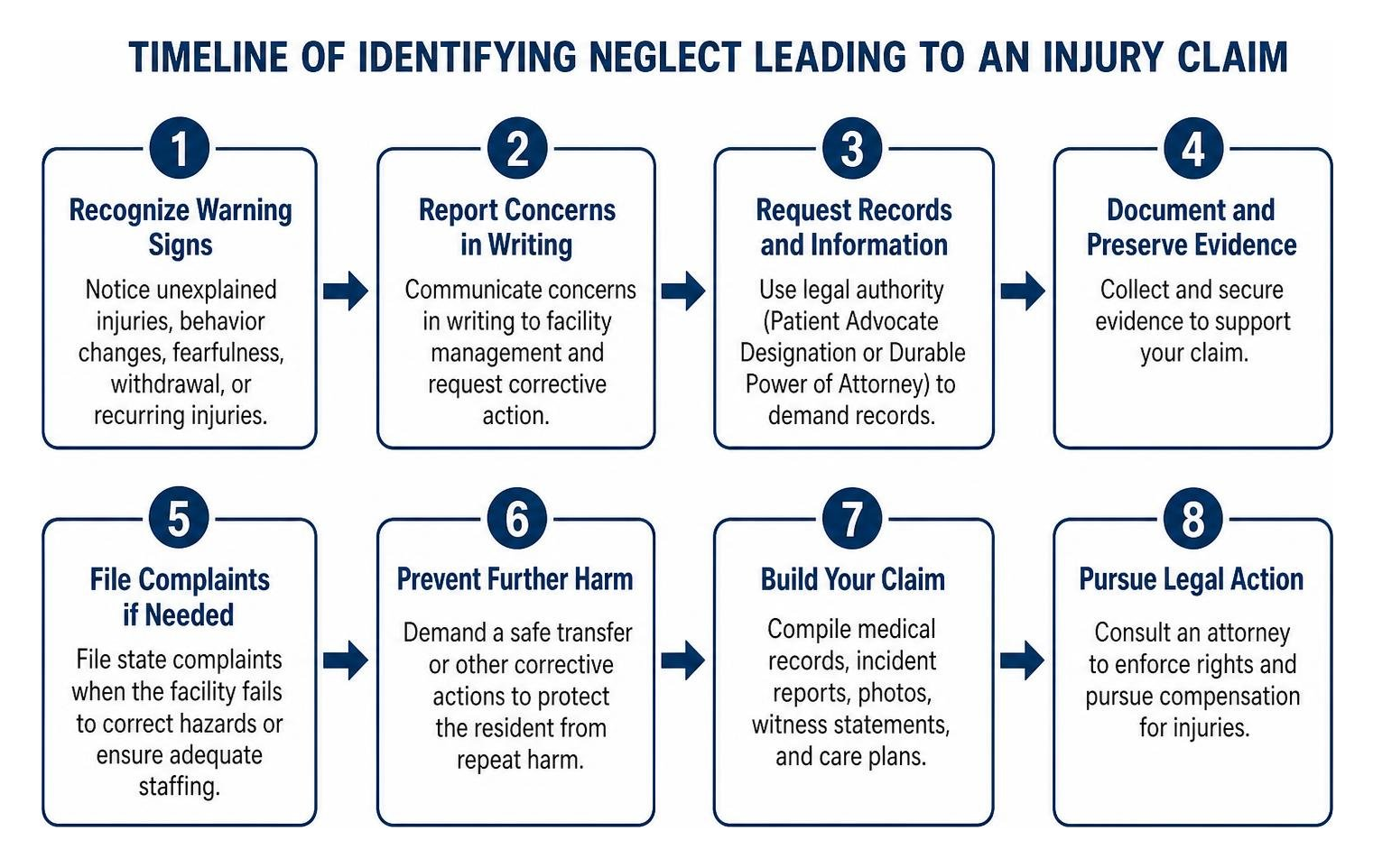
To build a solid claim, document every detail surrounding the event:
- Immediate Medical Records: Request copies of emergency room intake notes, diagnostic scans (X-rays, CT scans, MRIs), and hospital discharge instructions.
- Internal Incident Reports: Request the facility’s official incident summary immediately.
- Photographic Evidence: Capture high-resolution, dated photographs of visible injuries (bruises, lacerations, pressure sores) as well as the immediate physical environment (broken call buttons, wet floors, poor lighting, defective bed rails).
- Witness Statements: Write down the names, shifts, and contact information of aides, nurses, room neighbors, and visiting family members who saw what happened.
- Care Plan Modifications: Retain copies of care plans showing whether promised supervision levels were actually delivered.
Protecting Vulnerable Residents After an Injury or Safety Failure
Residents living with dementia or age-related cognitive decline are often unable to report neglect or recount how an injury happened. This makes them particularly vulnerable to repeat harm.
If you notice unexplained behavioral shifts, fearfulness around specific staff members, sudden withdrawal, or recurring injuries, communicate your concerns in writing to facility management. If the facility fails to correct the hazard or ensure adequate staffing, exercising legal authority through a Patient Advocate Designation or Durable Power of Attorney allows you to demand records, file state complaints, or initiate a safe transfer.
Navigating Facility Disputes, Resident Rights, and Injury Claims
Disputes with assisted living providers often arise over sudden rate hikes, unexpected discharge notices, poor medication management, or disputed injury causes. When management blames the resident for their own injury—claiming a fall was simply an inevitable consequence of aging rather than inadequate supervision—our firm steps in to enforce accountability.
Consulting an Assisted Living Attorney Dearborn Residents Rely on After a Facility Injury
Admission agreements are often dozens of pages long and packed with dense legal language, mandatory arbitration clauses, and liability waivers designed to limit resident remedies. Having our team review these contracts helps clarify your legal rights.
When a fall, wandering incident, or medical complication occurs, navigating elder and nursing home neglect claims in Metro Detroit requires an assertive approach to cut through bureaucratic delays and push back against corporate insurance adjusters.
Identifying Abuse, Neglect, and Facility Liability
Assisted living liability generally stems from systemic staffing failures, improper staff training, or disregard for established safety protocols.
Common warning signs of actionable negligence include:
- Bedsores (Pressure Ulcers): Developing Stage 3 or Stage 4 pressure wounds indicates a failure to turn, clean, and properly reposition immobile residents.
- Preventable Falls: Fractured hips, head trauma, and subdural hematomas caused by lack of walking assistance, wet walkways, or broken bed rails.
- Medication Errors: Missed doses, incorrect medications, or overdoses resulting in toxicity, hospitalization, or rapid cognitive deterioration.
- Elopement and Wandering: Residents with cognitive impairment walking out of memory care units unsupervised due to malfunctioning door alarms.
- Resident Rights Violations: Deprivation of dignity, unauthorized physical or chemical restraints, isolation, or ignored hygiene needs.
When egregious neglect or medical errors lead to catastrophic harm, families can pursue justice through our practice area: personal injury. In the most tragic circumstances where facility negligence costs a loved one their life, our attorneys assist families in pursuing wrongful death claims to hold responsible parties fully accountable.
Steps to Take When Transitioning a Loved One to Assisted Living
Proactive planning protects both your loved one’s personal autonomy and your family’s financial future. Before an emergency strikes, ensure that critical legal instruments—such as Durable Powers of Attorney for financial affairs, Patient Advocate Designations (Healthcare POAs), and Living Wills—are properly updated and legally binding in Michigan.
When to Contact an Assisted Living Attorney Dearborn Seniors and Families Can Trust
Do not wait for a catastrophic event to seek legal guidance. Critical trigger events include:
- A sudden hospital discharge requiring rapid placement into a residential facility
- Sharp changes in physical or cognitive ability requiring a higher tier of care
- Receiving an unfair, surprise involuntary discharge or eviction notice from the facility
- Suspected financial exploitation, unexplained bank account withdrawals, or missing personal property
- Any unexplained fracture, deep bruising, head injury, or severe pressure sore
- Denials of long-term care insurance or disputes regarding benefits eligibility
Key Questions to Ask During Your Initial Consultation
Choosing the right legal advocate is an important decision. During your initial consultation, ask direct questions to evaluate how the firm will handle your case:
- What is your specific trial experience holding long-term care facilities and insurers accountable?
- How do you structure your fees (e.g., contingency arrangements where no fee is owed unless money is recovered)?
- Are you prepared to take our case to a jury trial in Wayne County Circuit Court if the facility’s insurer refuses a fair settlement?
- How will your team keep our family updated as evidence is gathered and claims proceed?
Frequently Asked Questions About Assisted Living Legal Counsel
What records should families preserve after an assisted living injury?
Families should retain the original signed admission contract, monthly billing statements, daily medication logs, internal incident reports, emergency room discharge paperwork, photographs of injuries, and all emails, text messages, or written notes exchanged with facility managers.
Can a family member be held personally responsible for assisted living debt?
Under federal and state law, facilities cannot require a third party to personally guarantee payment as a condition of admission. However, some admission contracts include confusing “responsible party” or “voluntary guarantor” language. If a family member signs as a voluntary guarantor, bill collectors may attempt to hold them personally liable for unpaid balances. An attorney can review the contract and defend against improper debt collection efforts.
What should families do if an assisted living facility denies responsibility for an injury?
If a facility denies fault, avoid arguing with administrators or signing any waivers or settlements. Immediately request all medical records, document the scene and injuries with photographs, file an official complaint with the state licensing bureau (LARA), and schedule a formal legal consultation to protect your claim.
Protect Your Loved One’s Rights and Dignity
When you place a loved one in an assisted living community, you are trusting that facility with their health, comfort, and safety. When that trust is broken through negligent care, understaffing, or dangerous conditions, your family does not have to face the facility’s insurance carriers alone.
At Jalal Abdallah PLLC, we stand up for individuals and families against large corporate entities and insurance companies. If your loved one suffered harm due to assisted living negligence or neglect in Dearborn or throughout Metro Detroit, schedule a consultation with our personal injury team today to demand accountability and secure the compensation your family deserves.
Share This Article

Schedule Your Free Consultation Today!
Reach out today and receive a consultation, completely free of charge - we'll evaluate your case and let you know what comes next.


