 Skip to content
What to Do After a Bus Accident in Michigan — And How to Get Paid
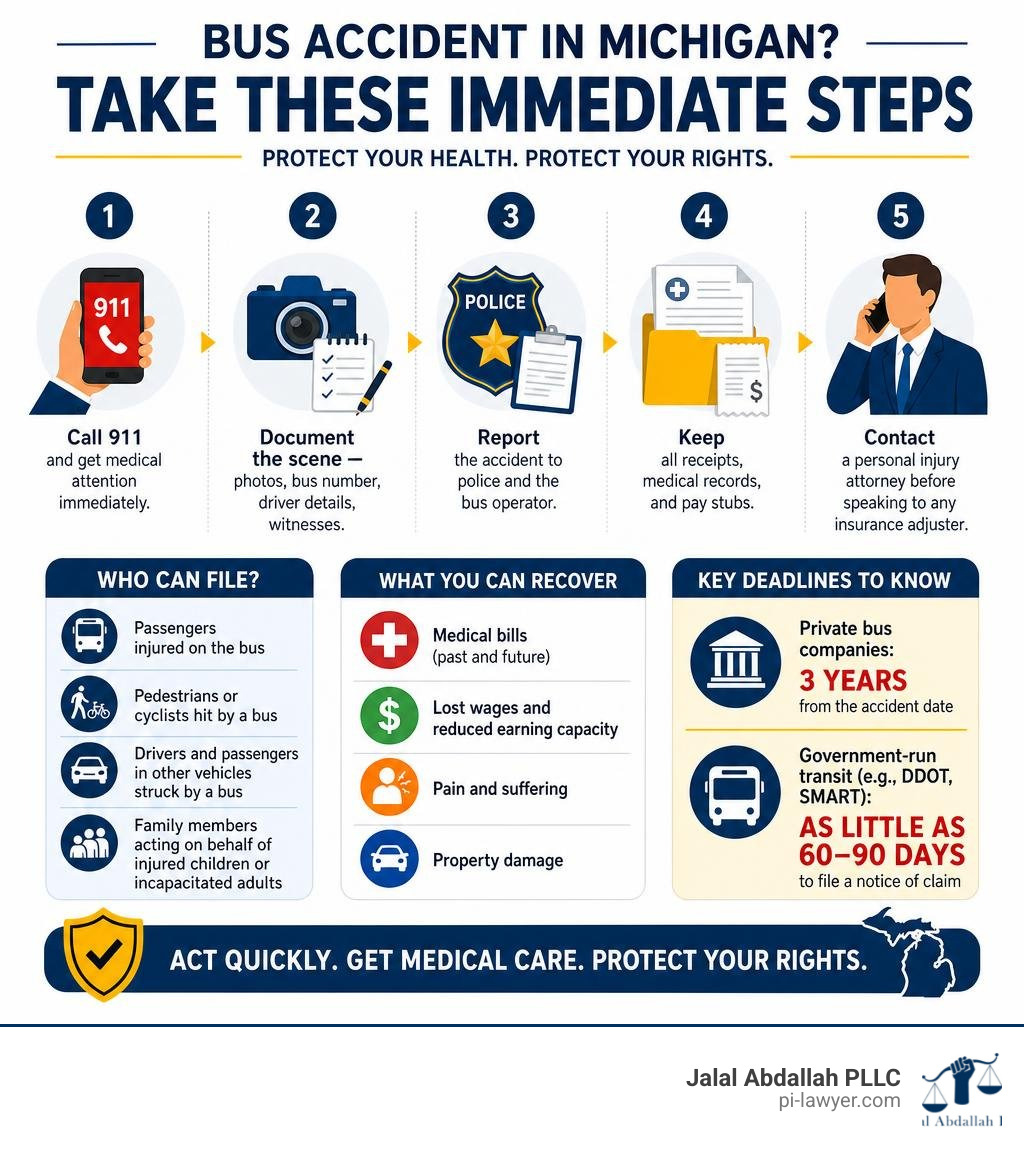
A bus accident compensation claim is your legal right to recover money for injuries and losses when you’re hurt in a bus crash that wasn’t your fault. Here’s a quick breakdown of what that means in Michigan:
Who can file:
- Passengers injured on the bus
- Pedestrians or cyclists hit by a bus
- Drivers and passengers in other vehicles struck by a bus
- Family members acting on behalf of injured children or incapacitated adults
What you can recover:
- Medical bills (past and future)
- Lost wages and reduced earning capacity
- Pain and suffering
- Property damage
Key deadlines to know:
- Private bus companies: 3 years from the accident date
- Government-run transit (e.g., DDOT, SMART): As little as 60–90 days to file a notice of claim
The basic steps:
- Call 911 and get medical attention immediately
- Document the scene — photos, bus number, driver details, witnesses
- Report the accident to police and the bus operator
- Keep all receipts, medical records, and pay stubs
- Contact a personal injury attorney before speaking to any insurance adjuster
Over 4,000 bus passengers are injured every year in the UK alone, and in the United States, more than 63,000 bus accidents happen annually. Michigan commuters are not immune. Whether you ride a city bus in Detroit, a school bus in Dearborn, or a charter coach on the highway, a crash can flip your life upside down in seconds — leaving you in pain, out of work, and facing a wall of insurance paperwork that feels impossible to climb.
That wall is exactly what insurance companies count on.
I’m Jalal Abdallah, a Michigan personal injury attorney at Jalal Abdallah PLLC, and I’ve built my practice fighting back against powerful insurance companies on behalf of people just like you — ordinary Michiganders trying to get fair compensation after someone else’s negligence turned their life upside down. In this guide, I’ll walk you through every step of filing a bus accident compensation claim in Michigan, so you know exactly what to do, what to avoid, and what your case may be worth.
Bus accident compensation claim terms to know:
What is a Bus Accident Compensation Claim and Who Can File?
At its core, a bus accident compensation claim is a legal demand for financial recovery after a crash involving a bus. If you are injured due to the negligence of a bus driver, a transit authority, a private charter company, or another motorist, you have the right to seek damages.
Under Michigan law, buses are classified as “common carriers.” This means they are in the business of transporting the public for a fee. Because they carry precious cargo—human lives—the law holds them to an exceptionally high standard of care. When a bus operator fails to meet this standard, they can be held liable for the resulting physical, emotional, and financial damage.
Establishing a claim requires proving four core elements of negligence:
- Duty of Care: The bus operator owed you a duty to transport you or share the road safely.
- Breach of Duty: The driver or operator breached that duty (e.g., by speeding, driving while fatigued, or failing to maintain the vehicle).
- Causation: This breach directly caused the accident and your subsequent injuries.
- Damages: You suffered actual measurable losses, such as medical bills, pain, or lost wages.
Eligibility Criteria for a Bus Accident Compensation Claim
Not everyone involved in a bus accident realizes they have the right to file a claim. If you fall into any of the following categories, you may be eligible to seek compensation:
- Bus Passengers: Whether you were seated, standing in the aisle, boarding, or exiting the vehicle, you are owed a safe environment. If a sudden stop, a collision, or a slip on a wet bus floor injures you, you can pursue a claim. Read more about protecting your rights as a passenger in Getting Your Dues After a Bus Collision Compensation Claim.
- Pedestrians and Cyclists: Because of their massive size and weight, buses cause catastrophic damage when they strike vulnerable road users. Pedestrians in crosswalks and cyclists in bike lanes are frequently victims of bus driver blind-spot errors.
- Other Motorists: If a bus rear-ends your car, sideswipes you while changing lanes, or runs a red light, you and your passengers can file a claim against the bus company or transit authority.
- Family Members: If a loved one is incapacitated or tragically killed in a bus crash, certain family members can file a claim on their behalf or pursue a wrongful death action.
Types of Injuries Covered Under a Bus Accident Compensation Claim
Bus crashes rarely result in minor bumps and bruises. Because most commercial and public transit buses lack seat belts and airbags for passengers, the physical forces inside the cabin during a crash are violent. Passengers are routinely thrown from their seats, slammed into metal handrails, or tossed into the aisle.
We regularly help clients recover compensation for a wide variety of injuries, including:
- Whiplash and Soft Tissue Damage: The violent whipping motion of the neck during a sudden stop or collision can stretch or tear muscles and ligaments, leading to chronic pain.
- Traumatic Brain Injuries (TBIs): Concussions and severe brain trauma occur when a passenger’s head strikes a window, metal pole, or another passenger.
- Spinal Cord Injuries: Fractured vertebrae or herniated discs can lead to temporary or permanent paralysis, requiring lifelong medical care.
- Fractures and Broken Bones: Arms, collarbones, ribs, and legs are frequently broken as passengers instinctively try to brace themselves during an impact.
If you have suffered any of these life-altering conditions, we invite you to explore our Practice Area: Personal Injury page to learn how we build these complex cases.
Common Causes of Bus Crashes in Michigan
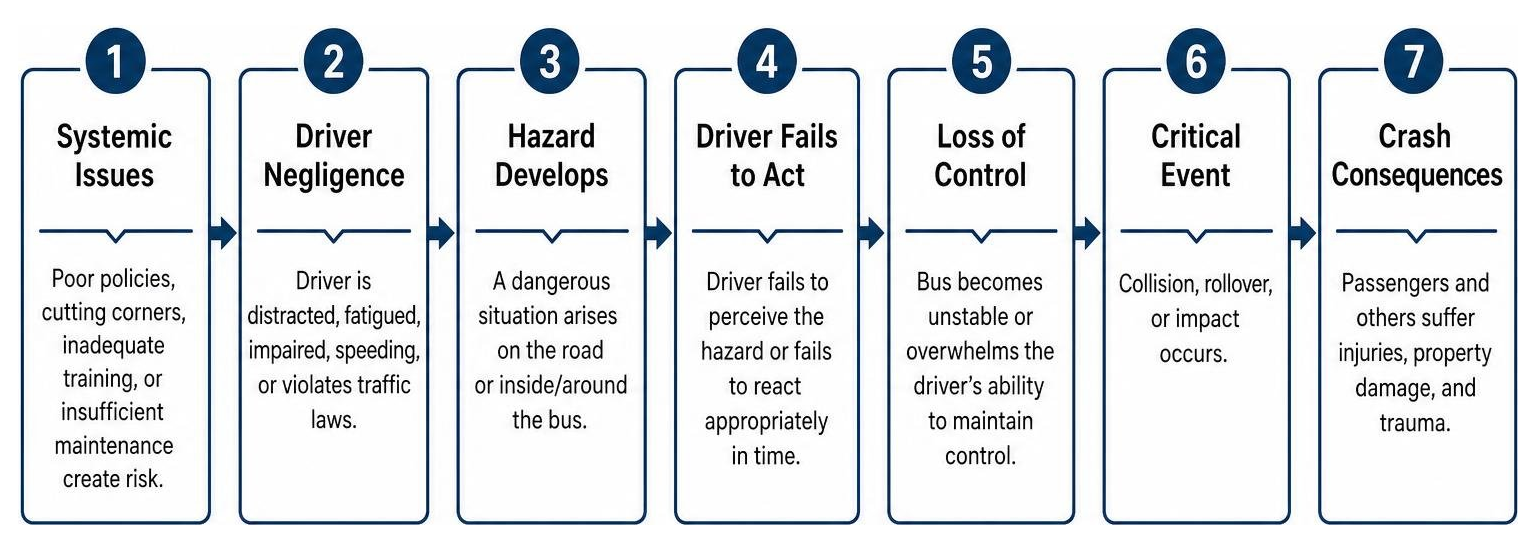
To win a bus accident compensation claim, we must pinpoint exactly what caused the crash. Bus accidents are rarely simple “accidents.” They are almost always the result of human error, poor corporate decisions, or systemic negligence.
Driver Negligence and Common Carrier Duty of Care
Because buses are massive vehicles carrying dozens of passengers, their drivers must undergo rigorous training and hold commercial driver’s licenses (CDLs). Unfortunately, bus companies often cut corners on hiring, training, and monitoring their staff.
Common examples of driver negligence include:
- Driver Fatigue: Commercial bus drivers often work long, grueling shifts. Despite federal hours-of-service regulations, fatigue remains a leading cause of highway bus crashes.
- Distracted Driving: Checking a phone, adjusting a GPS, or interacting with unruly passengers takes a driver’s eyes off the road.
- Speeding and Reckless Maneuvers: Trying to stay on a tight schedule can tempt drivers to speed, tailgating smaller vehicles, or execute dangerous turns.
- Sudden Harsh Braking: Stopping abruptly without an emergency reason can throw passengers forward, causing severe head and wrist injuries.
In Michigan, the common carrier rule means that a bus company cannot simply claim “we tried our best.” They must exercise the highest degree of care consistent with the practical operation of their vehicles.
Third-Party Motorists and Road Hazards
Sometimes, the bus driver is not the one who made the mistake. A crash can be caused by:
- Negligent Car Drivers: A distracted driver in a passenger car cutting off a bus or running a stop sign can force the bus driver to swerve or crash. If you were hurt in this scenario, you can learn more about your options on our Practice Area: Car Accidents page.
- Mechanical Failures: Defective brakes, bald tires, or steering failures can cause a driver to lose control. In these cases, the bus maintenance provider or parts manufacturer may be held liable.
- Poor Road Maintenance: Potholes, missing signage, or improperly designed construction zones can cause a multi-vehicle pileup involving a bus.
Calculating Your Payout: What is Your Injury Case Worth?
One of the first questions clients ask is: “How much is my bus accident compensation claim actually worth?”
The honest answer is that there is no magic formula. The value of your settlement depends heavily on the severity of your injuries, the clarity of liability, the available insurance policy limits, and how your daily life has been impacted.
To give you a general idea of how insurance companies and courts view these cases, consider the typical ranges below:
| Injury Severity | Typical Payout Range | Key Factors Involved |
|---|---|---|
| Minor (Whiplash, minor cuts, sprains) | $5,000 – $25,000 | Soft tissue injuries, short-term physical therapy, full recovery expected within weeks. |
| Moderate (Simple fractures, concussions, moderate back injuries) | $50,000 – $150,000 | Broken bones requiring casts, mild TBI, several months of missed work, ongoing pain. |
| Severe (Spinal cord damage, severe TBI, multiple complex fractures) | $250,000 – $1,000,000+ | Permanent disability, surgical interventions, loss of career, lifelong care needs. |
Economic Damages: Medical Bills and Lost Wages
Economic damages are the objective, quantifiable financial losses you incur because of the crash. Thanks to Michigan’s unique No-Fault auto insurance system, recovering these damages can be complex.
If you own a car or live with a relative who does, your own Personal Injury Protection (PIP) insurance is typically the primary payer for your medical bills and lost wages, even if you were riding a bus. If you do not have access to a No-Fault policy, you may have to file a claim through the Michigan Assigned Claims Plan (MACP) or pursue the at-fault bus company directly.
Economic damages cover:
- Emergency Medical Expenses: Ambulance rides, emergency room visits, diagnostic scans (CTs, MRIs), and surgeries.
- Ongoing Rehabilitation: Physical therapy, occupational therapy, and chiropractic care.
- Lost Wages: Compensation for the time you had to take off work to heal.
- Future Lost Earning Capacity: If your injuries prevent you from returning to your previous job, you can claim the difference in lifetime earnings.
To dive deeper into how we calculate these financial losses, review our Dearborn Car Wreck Compensation Guide: What Your Crash Is Really Worth.
Non-Economic Damages: Pain and Suffering
Unlike a medical bill, pain doesn’t come with a receipt. Non-economic damages compensate you for the physical pain, emotional trauma, and psychological scars left by the crash.
These damages can include:
- Physical Pain and Discomfort: The daily physical struggle of living with a severe injury.
- Emotional Distress and PTSD: Over 32% of road accident survivors suffer from psychological harm, such as a severe phobia of riding public transit or driving.
- Loss of Enjoyment of Life: Being unable to participate in hobbies, play with your children, or enjoy social activities.
Because insurance adjusters use computerized programs to lowball pain and suffering payouts, you need a skilled attorney to tell your human story and demand what you are truly owed. You can read more about how we fight for these damages in our guide on Understanding Pain and Suffering Damages in Personal Injury Cases.
Public Transit vs. Private Bus Companies: Key Differences in Filing
Filing a bus accident compensation claim is vastly different depending on whether the bus is owned by a private company or a government entity. Failing to understand these differences can result in your claim being permanently thrown out before it even starts.
Strict Deadlines for Government-Run Transit
If you are injured on a public transit bus in Michigan—such as a Detroit Department of Transportation (DDOT) bus, a Suburban Mobility Authority for Regional Transportation (SMART) bus, or a university shuttle—you are dealing with a government entity.
Government bodies are protected by a legal concept known as “sovereign immunity.” While you can still sue them, the law places incredibly strict hurdles in your path:
- The Notice of Claim: You cannot simply file a lawsuit. You must first serve a formal “Notice of Intent” or “Notice of Claim” to the correct government department.
- Extremely Short Windows: While a private claim gives you years, a government claim may require notice in as little as 60 to 90 days from the date of the crash. If you miss this deadline by even a single day, you lose your right to sue forever.
For a detailed roadmap on how to handle these urgent municipal claims, see our guide on Dearborn Bus Crash Claim: Your Roadmap to Recovering Compensation.
Standard Statutes of Limitations for Private Carriers
If the crash involved a private charter bus, a tour bus, or a commercial shuttle, the rules are slightly different.
- Three-Year Statute of Limitations: In Michigan, you generally have three years from the date of the accident to file a personal injury lawsuit against a private entity.
- Commercial Insurance Policies: Private charter companies are required to carry high-limit commercial liability insurance policies. While this means there is usually more money available to cover severe injuries, it also means you will be facing aggressive, well-funded corporate defense lawyers.
If you were injured on a chartered vehicle, you can find specialized guidance on our Charter Bus Accident Lawyer Help page.
Frequently Asked Questions about Bus Accident Claims
Can I still claim compensation if I was partly at fault for the bus accident?
Yes. Michigan operates under a legal system called modified comparative negligence.
This means that you can still recover compensation even if you were partially to blame for the accident, provided your percentage of fault is not 51% or more. If you are found to be 50% or less at fault, your final compensation payout will be reduced by your percentage of blame. For example, if a jury awards you $100,000 but finds you 20% at fault because you were standing in a restricted area of the bus, your final payout will be $80,000.
Do I need a lawyer to handle my bus accident claim?
While you are technically allowed to handle your claim on your own, doing so is highly risky. Bus accidents involve multiple parties, complex commercial insurance policies, and strict government deadlines.
Insurance companies are not your friends. They are businesses focused on protecting their bottom lines. Adjusters will call you shortly after the crash, offering a quick, lowball settlement in exchange for you signing away your rights. They may also try to record you and use your words to devalue your claim.
Working with a dedicated personal injury attorney ensures that your rights are protected, your damages are fully calculated, and the insurance companies are forced to negotiate fairly. To learn more about the tactics they use, read How Insurance Companies Try to Devalue Your Injury Claim.
What evidence is needed to support a successful bus accident claim?
To build a rock-solid claim, we need to gather as much physical and digital evidence as possible. The most critical pieces of evidence include:
- Onboard CCTV Footage: Most modern buses are equipped with internal and external cameras. This video must be requested immediately before the company overwrites or deletes it.
- The Bus “Black Box”: Commercial buses contain electronic logging devices that record speed, braking, and steering inputs leading up to a crash.
- Police Reports: The official report filed by responding officers provides an objective overview of the scene and any citations issued.
- Witness Statements: Contact information and written accounts from fellow passengers or bystanders who saw the crash.
- Medical Records: Comprehensive medical documentation linking your physical injuries directly to the impact of the bus crash.
Secure Your Recovery with Relentless Legal Advocacy
When you are recovering from a devastating bus crash, the last thing you should have to worry about is arguing with insurance adjusters or missing strict government filing deadlines. You need a legal team that acts as your shield, letting you focus on what matters most: your physical healing.
At Jalal Abdallah PLLC, we pride ourselves on being relentless advocates for the underdog. We do not back down from powerful insurance companies, massive charter corporations, or city transit authorities. We handle every detail of your case—from gathering black-box data to negotiating with medical providers—so you can move forward with peace of mind.
We work on a contingency fee basis, which means you pay us absolutely nothing upfront, and we only get paid if we successfully secure a settlement or verdict for you.
Don’t let an insurance company dictate what your recovery is worth. Take control of your future today. Contact Us online or call our Dearborn office to schedule your free, no-obligation case consultation. Let us fight to get you every dollar you deserve.
Share This Article

Schedule Your Free Consultation Today!
Reach out today and receive a consultation, completely free of charge - we'll evaluate your case and let you know what comes next.


